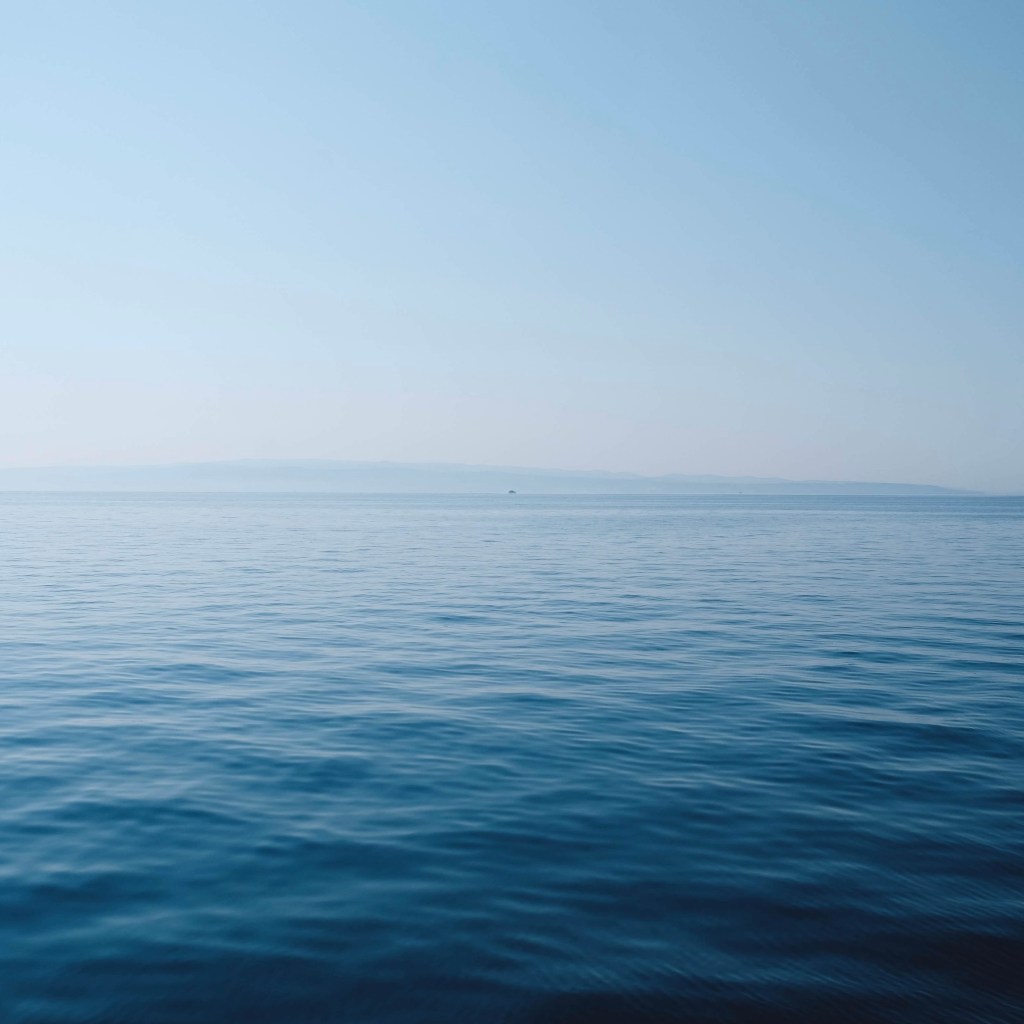
I came across in the New Yorker recently an article by Brooke Jarvis about how we attempt to measure the unmeasurable. She was reflecting on what we call sea level. Jarvis writes:
“Mountains, oddly, are the reason most of us have learned to think of the level of the sea as a stable point, a baseline, an unmoving benchmark against which one might reasonably measure the height of great peaks. We confidently assert that Mt. Rainier rises 14,411 feet above sea level, without stopping to ask ourselves what exactly we mean: what sea, and where and when, and in what state of weather?
The oceans, we know, are never at rest; they’re pulled to and fro by the moon (in the Bay of Fundy, a single tidal change can lower the water by more than fifty-three feet)…. oceans have risen and fallen by hundreds of feet … and they are currently pushing, at a fairly rapid clip, over seawalls and into cities.
Given this history, it would seem ludicrous to take mean sea level—something ‘as ephemeral as a fleeting ray of sunshine on a wintery afternoon,’ as the Australian geologist Rhodes W. Fairbridge wrote in 1961—to be a standard of stability.”
It is fascinating to consider what we might use as a “standard of stability” to measure aspects of our lives. And it is worth asking if such a standard, or a tool of measurement, even exists in the physical world, or is it rather found in the realm of ideas or spirit.
——
If you know someone who might like to receive a daily email of On Emotions CLICK HERE.
To download or share a free copy of my new book How to Feel (a little better): 50 Ideas for 2024 CLICK HERE.
 On Emotions