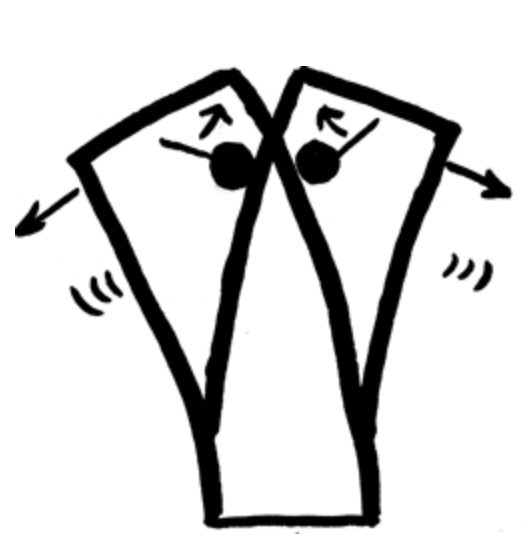
One of the strangest things about skyscrapers is they are designed to sway in high winds and storms. To keep a building from swaying too much and toppling, engineers design what’s called a “pendulum” that sways in the opposite direction of the building to keep it steady.
In her wonderful book Built, Roma Agrawal notes how it’s helpful to imagine a building as “a tuning fork and the pendulum acts like your finger, absorbing the energy created by the movement of the skyscraper.” (You’ll find a sketch of what Agrawal is describing at on-emotions.com)
As an example of a pendulum, Agrawal writes about the Taipei 101, the tallest building in the world in 2004, and known for “the huge ball of steel that hangs between the 92nd and 87th floors.”
In 2015, this pendulum made all the difference when “Typhoon Soudelor swept across Taiwan, gusting to at least 170km/hr… [and] Taipei 101 escaped undamaged. Its saviour, the pendulum, recorded movement of up to 1m – its largest-ever.”
Life sways us back and forth between our victories and defeats, hope and despair, calm and surges of anxiety.
We all need to find a way to “pendulum the sway,” as we call it; to identify how to dampen vibrations of our defeats, despair and anxiety.
One way to create a pendulum is to consider our senses.
For example, sound can pendulum the sway. We have found listening to Sunday morning jazz playlists helps. What we touch can pendulum the sway – like holding someone’s hand or paying attention to the texture of a strawberry. What we choose to gaze upon can help absorb the energy, like keeping a sequence of our favorite photos in an album on our phone.
Buildings sway – people sway – and to keep from toppling, we all need to identify our pendulum.
——
If you have been forwarded this email and would like to join a community of people pondering how to feel better in their lives you can subscribe and receive a daily email here.
 On Emotions