I wonder, do you like to be surprised?
Most nights I walk the two-mile perimeter around Tod’s Point, a peninsula on the Connecticut coast. I notice the sea grass change from gold to green, the migrations of the egret, and the slow progress on “Sweet Betty” as a boat-owner restores her to one day be seaworthy.
What had escaped my attention until quite recently was the cactus along the shoreline. At first I thought someone must have tossed an unwanted succulent out the window as they drove by. Why else would a cactus take root along a waterway in Connecticut?
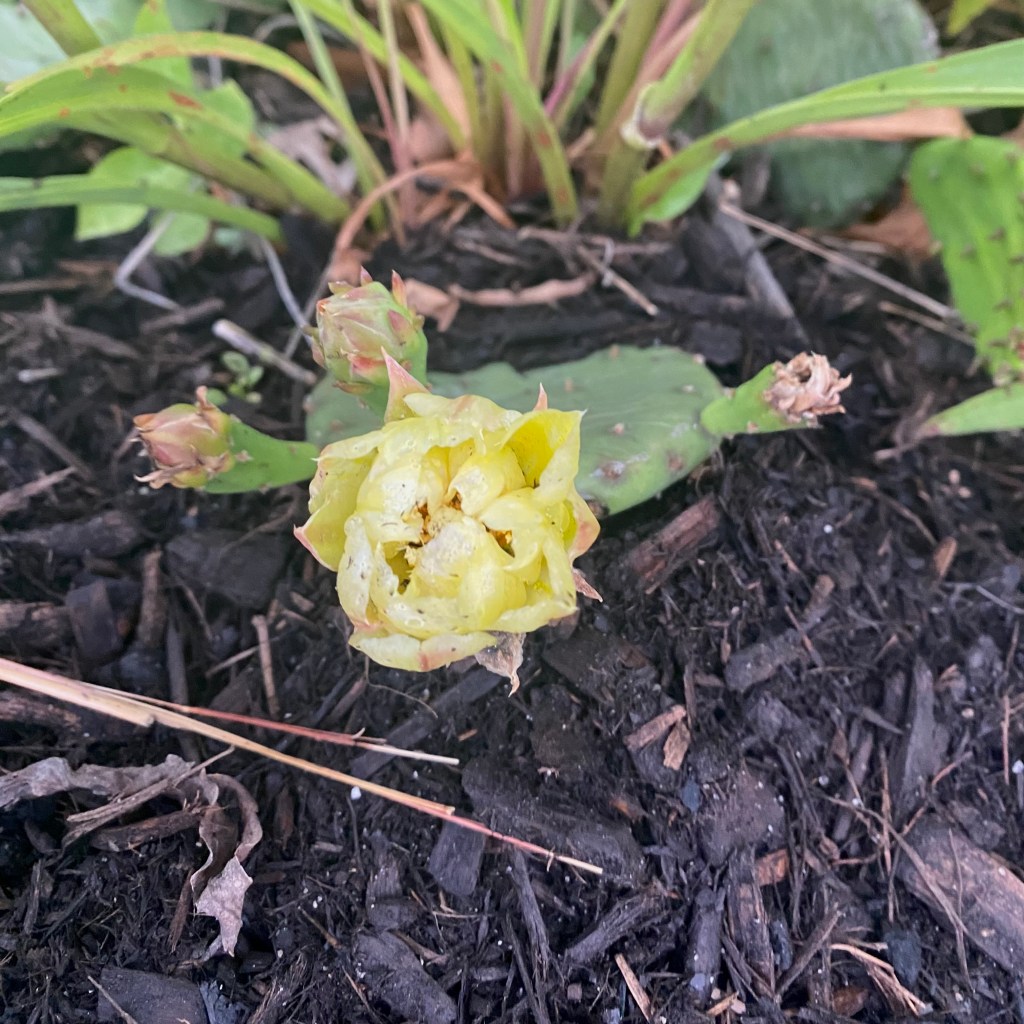
Yesterday I walked by and noticed a yellow blossom on the green prickly leaf. I walked a few more steps and found another and then another, all adorned with bright blossoms. What were they doing there and how had I missed this long patch of cacti?
The answer to the first question is that far from being tossed into a random environ, the Eastern Prickly Pear is native to New England shorelines. In other words, for generations, this cactus has endured harsh winters and greeted humid summers with yellow blossoms.
The answer to the second question is simply that I was not looking for a cactus in Connecticut. But it had been there all along – enduring and adorning. And yet one day, it surprised me!
As we get older, we begin to think about surprises with negative emotions. We like to think we are in control or can at least see what is on the horizon, but surprises puncture that confidence and can at times fill us with dread and anxiety.
What if we began this new day, scanning for a good surprise? What if our eyes skimmed the landscape for something beautiful, something that likely has been there all along, but has escaped our attention, simply becuase we weren’t expecting to see it?
What if our emotions discovered delight in a surprise, like one who stumbles upon a cactus in Connecticut?
 On Emotions